The Problem: To Measure Strain and
Thermal Expansion
The K100/SPC optical head using
the HoloFringe300 interferometry program provides a speckle correlation system
that measures displacements at right angles to the line of sight. The resulting
fringes measure thermal expansion or unidirectional strain. Time-lapse
recordings can be used to collect data for stress relaxation studies. Fringe
patterns can be converted to data and data files can be added together to
generate start-to-finish analyses.
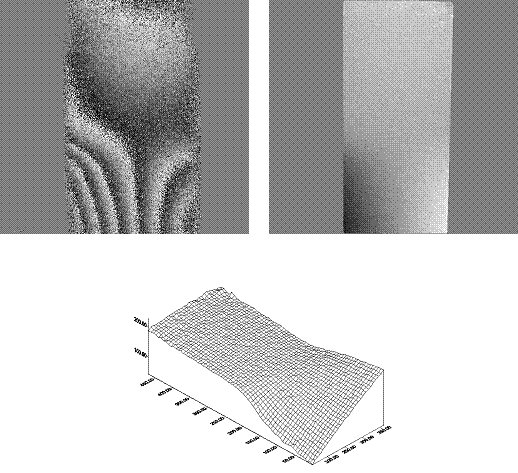
Figure 4. Thermal Expansion of a
Glass Jar. Fig. 4a shows the deformation of a glass jar when partially
filled with warm water. The fringes are the wrapped phase, and are displayed in
real-time. The speckle correlation system is setup so that it is sensitive to
horizontal displacements. Fig. 4b shows the fringe locus function extracted
from the fringes of 4a by the unwrapping program. Fig. 4c shows the deformation
as a 3D plot. The slope of the deformation plot is proportional to the thermal
expansion even though the geometry of the jar is circular, a fact that
makes thermal expansion measurements very easy.